
A single wallet on the Ethereum L1
In v3, users can sign actions and move funds directly from their EOAs or multisigs - there is no longer a “Derive Wallet” / “Smart Contract Wallet” in the middle. Furthermore, funds no longer need to be moved to a separate “Derive Chain”. Builders can move funds directly from user wallets to the exchange by interacting with Ethereum L1 contracts only.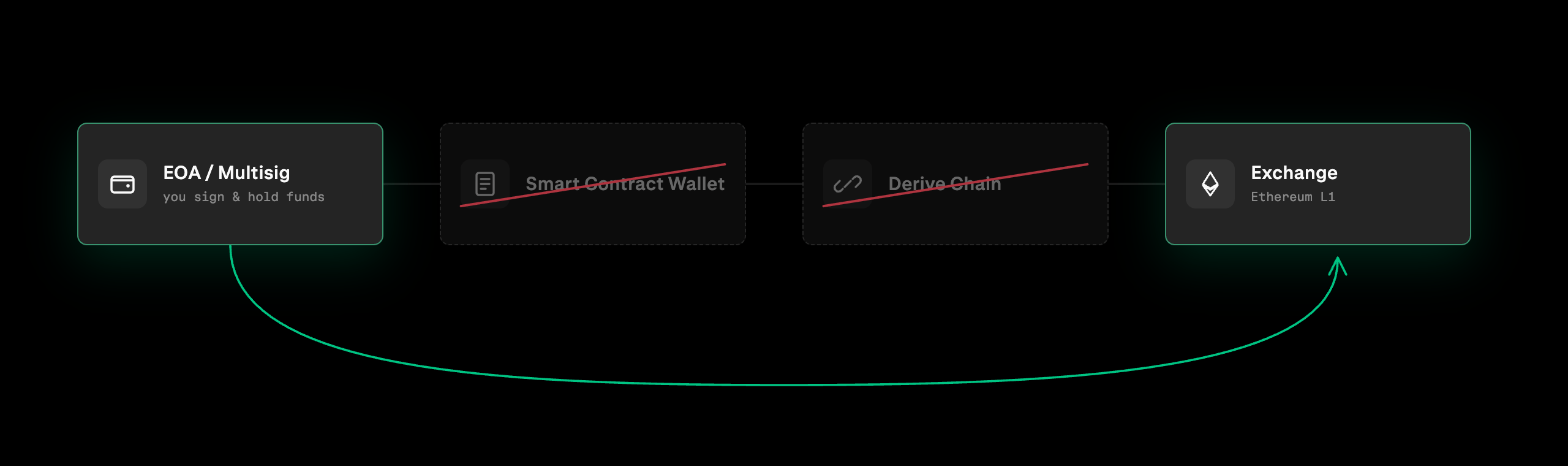
Multi-sig & smart-contract account ownership
In v3 a Derive account can be owned by a multi-sig or any smart contract on the Ethereum L1, not just an EOA. Because a contract can’t produce the single-key signature that offchain actions need, it operates through L1 onchain actions: it deposits to create the account and authorizes an EOA session key straight from L1, and that key then trades, transfers, and runs vaults offchain like any other. Custody and control stay on-chain with the contract. See Smart Contract & Multi-sig Accounts for the full flow.Programmatic account creation
Builders of front-ends and products on top of the Derive Exchange no longer need to reach out for access to account creation. Users also do not need to create accounts in the UX before they can use the API or any 3rd party apps. Subaccounts get created automatically when the first deposit happens. This means builders can launch applications within minutes with no humans in the loop. See the Programmatic Onboarding guide for more information.Bridging flexibility
The Derive Exchange now has contracts deployed directly on the Ethereum L1. This allows builders and users to use any bridge they want to move funds to the ETH L1 before depositing to the Derive Exchange.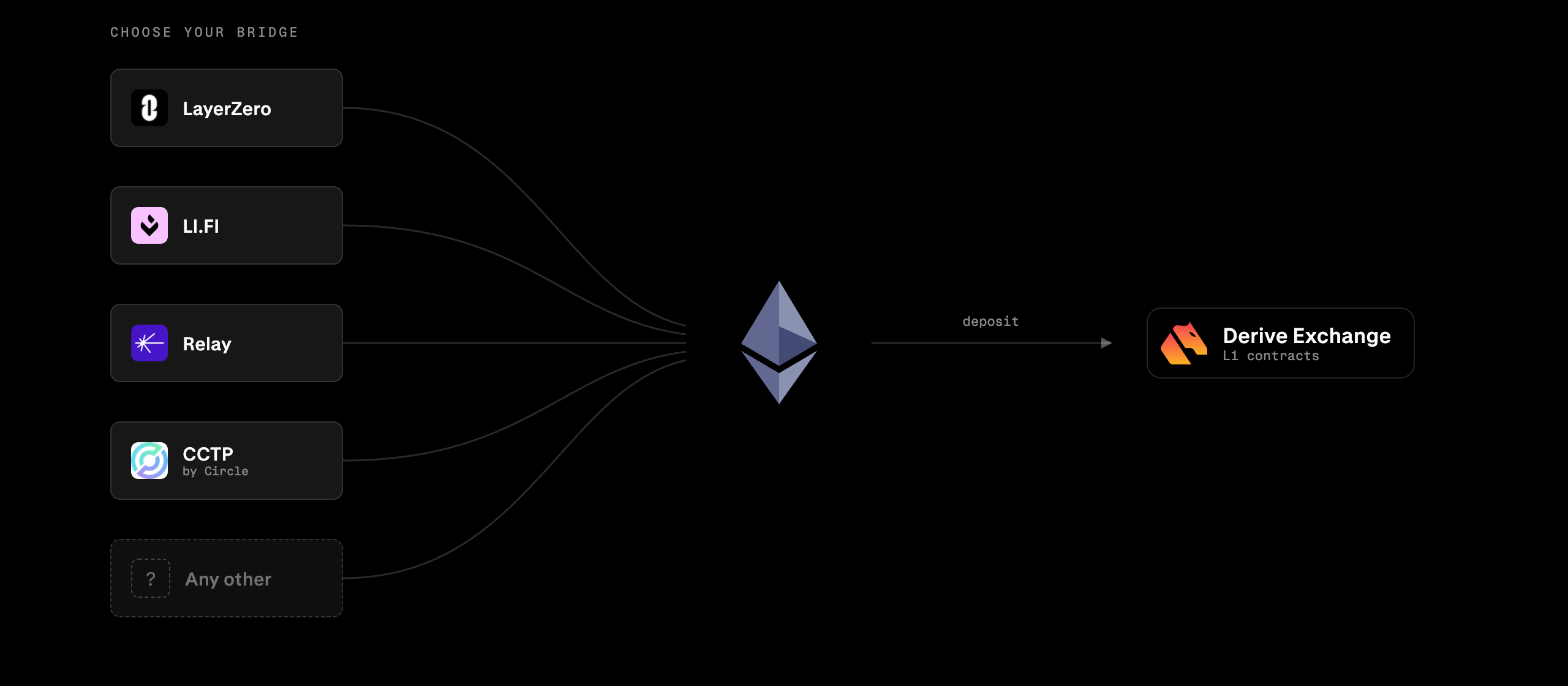
Next
- New features — what v3 adds on top of v2.
- Migration skill for your coding agent — renamed methods, signed-action changes, reshaped responses, and a migration checklist.